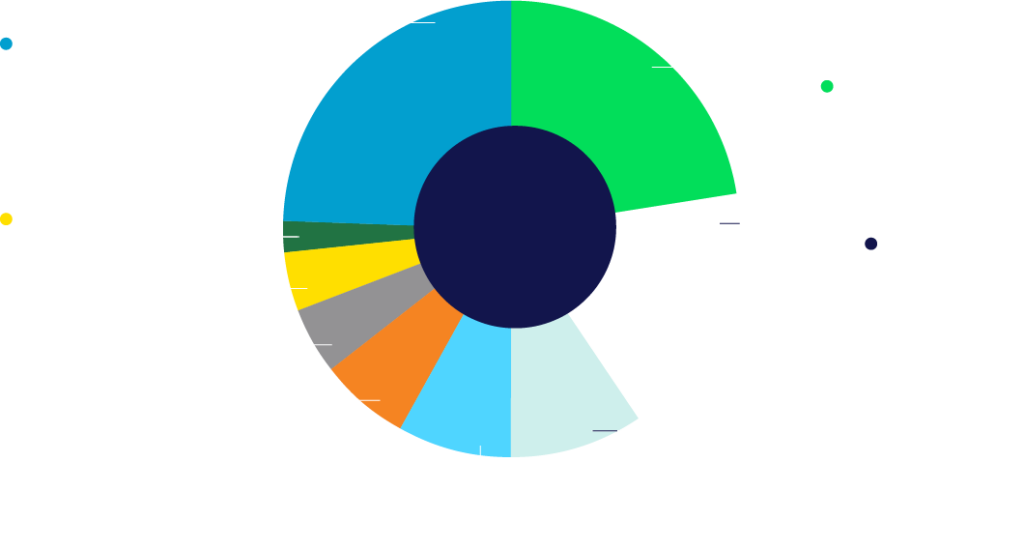
Climate Lead has catalyzed $6.1B+ into climate philanthropy by 115+ donors.
Continue scrolling for examples of impact this funding has had in select sectors.
Achieving Climate Justice at the World’s Highest Court
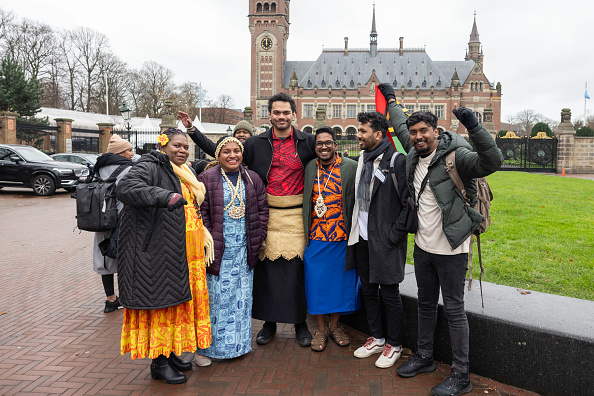
When the world’s highest court ruled last summer that countries have a legal obligation to protect the climate, few realized that this was the culmination of a years-long effort initiated by 27 law students in Vanuatu.
In 2019, these students—who grew up watching their homes flood at high tide and the coastal villages of their ancestors disappear—were assigned a project: How could international law be used to advance climate justice?
One idea stood out: Ask the International Court of Justice (ICJ) to issue a legal opinion on the responsibilities of countries to protect people from climate change.
Philanthropy sparked one of the boldest climate justice efforts in recent history. A modest early grant paid for two campaigners to develop a strategy and work with the Vanuatuan government. Additional funding activated “people power” to advance the case, first to the U.N. General Assembly, which affirmed the resolution unanimously, and then to the ICJ. Philanthropy helped the students and the coalitions they built prepare for the hearings, construct a strong legal case, and ultimately argue it before the court.
The return on philanthropic investment is huge: The ICJ’s advisory opinion makes it clear that countries and polluters have a duty to protect people from climate harms.
© Michel Porro
As a result of advocacy and a strong legal case, the world’s highest court ruled that countries have a legal obligation to protect the climate.
Climate Lead has catalyzed more than $350 million toward organizations that support movements and advance transformative efforts like this one.
Reducing Food Waste
Over 30 percent of the food produced around the world goes uneaten—rotting in refrigerators, on crop fields, and in inadequate storage in between. In total, wasted food contributes at least 3 percent of global emissions and amounts to nearly $1 trillion in economic losses.
Between 2007 and 2018, the U.K. reduced food waste by almost 30 percent. Philanthropy funded NGOs that mobilized for effective government policies, like a tax to reduce the waste that businesses send to landfills, clearer food labeling, and consumer outreach, such as the “Love Food, Hate Waste” campaign.
These efforts are now scaling globally, and collaborative efforts, supported by philanthropy, are accelerating progress as participating countries employ tried and tested solutions.
Food loss has been reduced by more than 25% by multinational companies and countries like the U.K. who’ve proven it is possible.
Climate Lead has catalyzed more than $242 million toward organizations transforming our food and agricultural systems from start to finish.
Protecting Forests at Scale
Healthy forests naturally remove carbon and keep us cooler. When they are destroyed, they do the opposite, losing the ability to absorb carbon and spewing more into the atmosphere.
One of the most powerful ways to protect forests is giving the rights to steward and manage land to the Indigenous Peoples and local communities (IPLCs) who live there. Philanthropy has supported these efforts by funding technology that maps Indigenous territories, expanding access to legal rights and land title, and bolstering the ability of IPLCs to work effectively with governments and business.
In 2024, Brazil demarcated more Indigenous land than in the entire 10 years prior, and last year, in Bélem, Brazil, 5,000 Indigenous representatives attended and more than 800 Indigenous negotiators actively participated in COP30 climate negotiations in an unprecedented and coordinated way. Deforestation on Indigenous lands in the Brazilian Amazon fell by 25% in 2025—and as the “lungs of the Earth” are protected, the world reaps the benefits.
Indigenous lands encompass roughly 14% of Brazil’s territory or 117.4 million hectares, an area comparable to the size of Colombia.
Climate Lead has catalyzed more than $795 million toward this work, giving the people closest to the forest more power to protect it.
Accelerating Coal’s Decline
Coal emits pollutants that make people sick, contaminate water, and heat the planet. Over 20 years ago, a diverse coalition powered by philanthropy launched the Beyond Coal campaign in the U.S., which has shrunk coal’s share of electricity generation from 50 percent to less than 20 percent.
This success has inspired more countries to move beyond coal. In 2025, South Korea, a major coal-dependent nation that operates the world’s seventh-largest coal fleet, publicly committed to phase out the majority of its coal power plants by 2040.
Philanthropy supported a coordinated campaign linking coal to health concerns about air pollution and motivating the Korean public to speak out against coal in their communities, which led to stronger air quality regulations. It also backed research showing the long-term benefits for Korea in moving from coal to clean power, including increased energy security, more competitive businesses, and creation of thousands of jobs. Overall, these actions led to new commitments, including from a large insurance company that pledged to stop insuring new coal projects.
Civil society and philanthropy are now focused on South Korea implementing its commitment and leveraging the model to inspire their neighbors to follow suit.
The pipeline of new coal projects has shrunk by 76%+ since 2015 and is now concentrated in a shortlist of geographies.