Mike Schroepfer
Founding Partner, Gigascale Capital
Featured Conversation
How did climate become an urgent priority for you?
My interest in climate philanthropy was driven by the real harm and suffering it can cause current generations and the urgent need to find solutions. I had an image of a conversation with my children when they were older, along the lines of them asking: What were you doing to tackle the crisis? It was too hard or I don’t know felt like terrible answers to that question.
How do you think about doing both climate philanthropy and investing?
I put these into two very different categories even though my ultimate motivation is the same. If the output is a public good, we use philanthropy. When a clean product can beat emission-intensive incumbents on economics and performance, the market will scale it faster. That’s when I look at a solution from an investment lens.
Philanthropic work requires a connection with the issue. I’m trained as an engineer and have been building disruptive technology for the last 20-30 years. So the corner of climate philanthropy that caught my attention is where research and science can advance our understanding of a problem to inform engineers and others on which solutions could make the most difference at scale. For me, that’s mostly frontier science on averting sea level rise, understanding where warming is increasing faster than we thought, and figuring out what we can do about tipping points.
Outside of philanthropy, I started a venture firm that’s focused entirely on climate impact through commercially compelling technologies. It’s called Gigascale because that’s the scale we’re talking about. We ask questions like: How do you scale solar faster? How do we deploy clean baseload power with fission, with fusion, and with long-duration storage? How do we build out the electric grid more quickly? How do we 10x or 100x improve the energy efficiency of massive AI workloads to reduce cost and emissions? These are places where 10x improvement is not out of the question and you can have an impact at the scale we need over the next few decades, not the next few centuries.
What advice do you have for peers new to climate philanthropy?
There are two bottlenecks that I see people run into. The first is wanting to find the most optimal thing to fund. It’s a natural impulse and I felt it too. But it can be counterproductive, because while you’re searching for the single best use of the money, nothing is getting funded, and that delay has a real cost: lost time, stalled momentum, and work that never gets the chance to prove out. The goal isn’t to find the theoretically highest-impact thing. It’s to get good work moving now because in science and community-based work, continuity matters as much as which specific project you picked. The other thing I found is that sometimes after two or three years, the newness wears off and people don’t continue funding. If you think about a scientific or community endeavor working with people on the ground and organizations, the worst thing is to get two years of funding and then it’s cut off. So finding places where you think you can have ongoing personal engagement and excitement is really important. And finally, there are lots of people who will raise their hand—including me—to help accelerate your journey.
“
The goal isn't to find the theoretically highest-impact thing. It's to get good work moving now.
About
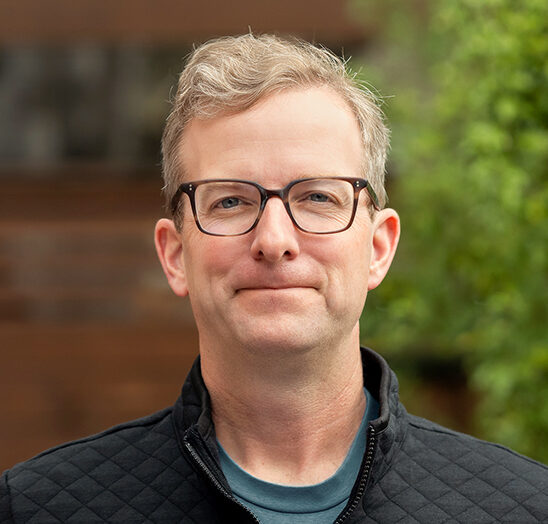
Mike ‘Schrep’ Schroepfer has a 25-year track record in technology and science as an executive, entrepreneur, investor, and philanthropist. He is Founding Partner at Gigascale Capital, which backs early stage companies rebuilding the physical economy for climate impact. Before Gigascale, Schrep spent 13 years as an operator at Meta, with 9 years as CTO. As a philanthropist, he started Outlier Projects, which funds research and policy to accelerate climate solutions.
“
The goal isn't to find the theoretically highest-impact thing. It's to get good work moving now.